

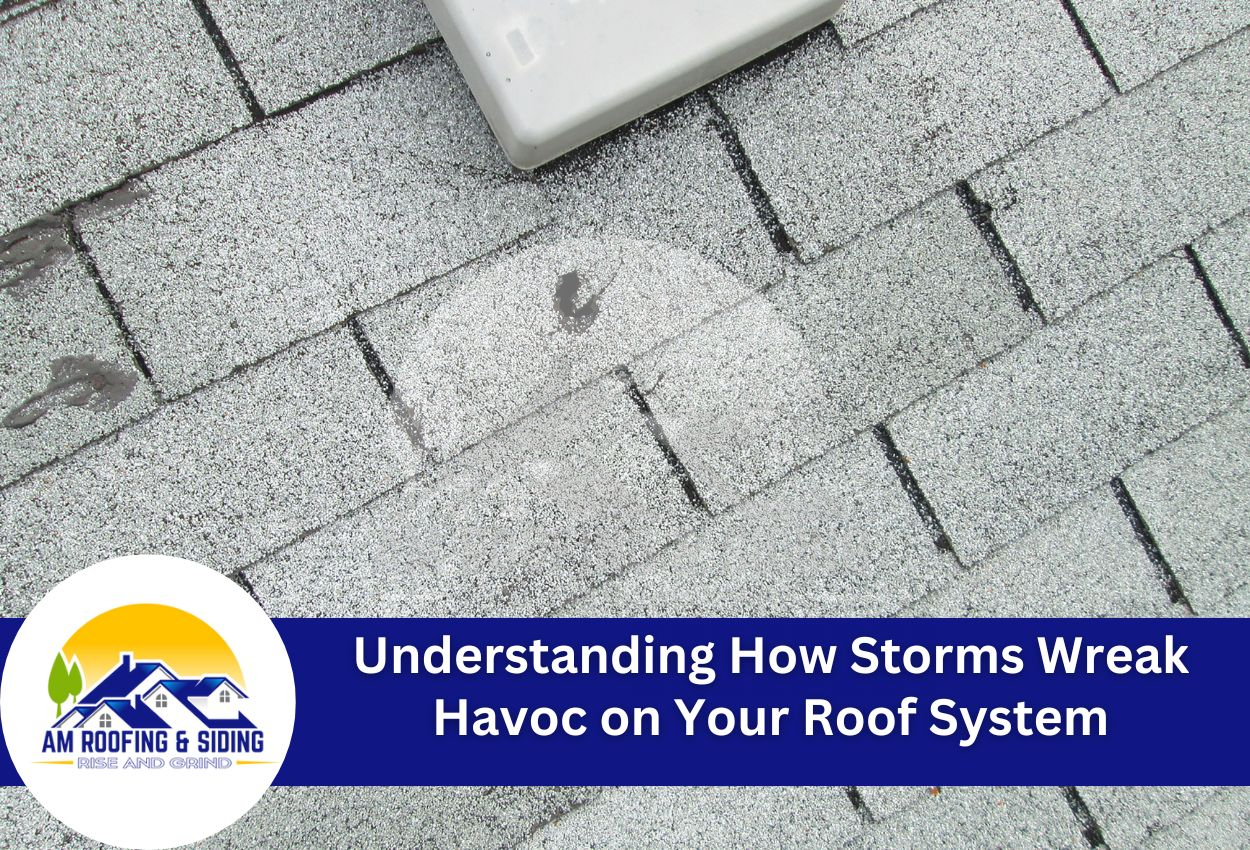
Storm damage to roofs affects thousands of homeowners each year, transforming a protective barrier into a liability within hours. When severe weather strikes, roofing systems face multiple forces that can compromise both materials and structural integrity. Wind damage to roofs occurs when powerful gusts create uplift pressure, loosening or completely removing shingles, flashing, and other components. These same winds often carry debris that hits roofing surfaces with tremendous force.
Hail is another significant threat, as marble-sized to softball-sized ice pellets pummel roofing materials. The impact creates granule loss on asphalt shingles, cracks in tile and slate, and dents in metal roofing panels. Storm-damaged shingles frequently develop weak points that allow water in, leading to dreaded roof leaks that require immediate attention.
All roofing materials respond differently to severe weather conditions. Asphalt shingles may curl, crack, or blow away entirely, while metal roofs can dent or develop loose fasteners. Clay tiles often crack under impact, and flat roofing membranes can puncture or tear. Age, installation quality, and maintenance history all influence how well a roof withstands a storm. Knowing these factors helps homeowners recognize when emergency roof repair is necessary to prevent extensive damage.
Strong Winds That Compromise a Roof’s Structure and Materials
High winds create devastating uplift pressure that systematically attacks roofing components from below and above. As wind flows over a roof’s surface, it generates negative pressure on the upper side while creating positive pressure underneath through gaps and openings. This pressure differential literally attempts to lift the entire roof system away from the structure. Storm damage is often caused by uplift forces that exceed the holding power of nails and adhesive strips, causing individual shingles to flutter, crack, or tear away completely.
Wind damage to roofs typically begins at vulnerable edges and corners where uplift forces concentrate most intensely. Flashing is more susceptible, as wind finds these transition points and exploits any existing weakness. Once flashing loosens or tears, water infiltration accelerates, often creating damage that extends far beyond the original scope.
Wind speed thresholds reveal predictable damage patterns across different roofing systems. Sustained winds of 45 to 55 mph begin loosening older or poorly maintained shingles, while gusts exceeding 70 mph can strip entire sections from even well-maintained roofs. Roof age significantly impacts wind resistance, as older shingles lose flexibility and adhesive strength over time. Steep-pitched roofs experience greater uplift forces than low-slope designs, while surrounding trees and structures can either shield roofs from wind or create dangerous turbulence patterns. When these conditions occur, emergency roof repair is often essential to prevent catastrophic structural and interior damage that threatens the entire building.
Hail Impact Damage and Its Effects on Roofing Components
Hailstone characteristics directly determine the extent of the damage inflicted on roofing materials during severe storms. The size, density, and impact velocity of hail create varying degrees of destruction across different roof components. Hail damage to roofs intensifies as stone diameter increases, with pea-sized hail typically causing minor granule displacement while golf ball-sized hail creates significant cracking and punctures. Impact velocity amplifies damage potential, as hailstones reaching terminal velocity can strike surfaces at speeds exceeding 100 miles per hour.
Storm-damaged shingles exhibit distinct patterns following a hail event, beginning with granule loss that exposes underlying asphalt layers to ultraviolet radiation and the elements. This granule displacement weakens the shingle’s protective barrier and accelerates deterioration. Larger hailstones create circular bruises or actual fractures that compromise the shingle’s waterproof integrity. Metal components like gutters, downspouts, and flashing may have dents, while roof vents and exhaust caps often crack or separate at mounting points under repeated impacts.
The immediate consequences of hail strikes extend beyond visible surface damage to create pathways for future problems. Cracked shingles allow moisture under them, which gradually undermines adhesive bonds and fastener integrity. Exposed underlayment is vulnerable to rapid degradation when protective shingle layers sustain damage. These compromised areas frequently develop into leaks, particularly during future weather events. Without emergency roof repair, hail-damaged roofing systems deteriorate rapidly, transforming manageable repairs into extensive replacement projects that affect entire roof sections.
Heavy Rain and Water Infiltration Through Compromised Areas
Storm-damaged roofing systems become vulnerable entry points for water when heavy rainfall follows initial weather damage. Areas previously compromised by wind or hail transform into direct pathways for moisture infiltration. What begins as minor water leaks through storm-damaged shingles can quickly turn into structural problems.
Backed-up gutters compound water infiltration issues by creating standing water along roof edges where damaged components already exist. When gutters cannot handle heavy rainfall volumes, water backs up under compromised shingles and flows along fascia boards into the structure. Damaged flashing loses its waterproofing effectiveness, allowing rainfall to seep directly into wall cavities and ceiling spaces.
Compromised seals around roof penetrations create concentrated leak points during heavy precipitation. Storm impacts often loosen or crack the caulking and flashing materials that normally prevent water entry around pipes, vents, and electrical connections. These small openings channel significant water volumes directly into building interiors, causing immediate damage to insulation, drywall, and electrical systems.
The progression from small leaks to major structural damage accelerates rapidly once water finds entry points. Roof leaks after a storm allow moisture to saturate wooden structural members, leading to rot, mold growth, and compromised load-bearing capacity. Without immediate emergency roof repair, these water infiltration patterns expand throughout the building, creating extensive damage that far exceeds the original storm impact.
Falling Debris and Projectile Damage During Severe Weather
Airborne debris transforms into dangerous projectiles when severe storms lift and propel objects through the air. Tree branches are a common source of projectile damage, as high winds snap limbs and hurl them against roofing surfaces with tremendous force. These impacts create punctures in shingles, crack tiles, and dent metal roofing components. Outdoor furniture, garbage cans, and lawn equipment become missiles during windstorms, striking roofs at various angles and velocities that determine damage severity.
The impact patterns from falling debris vary significantly based on object weight, shape, and trajectory. Sharp objects like broken tree branches penetrate roofing materials and often punch through multiple layers, creating immediate pathways for water infiltration. Blunt objects such as patio furniture typically cause crushing damage that compromises structural integrity without necessarily creating obvious holes. Both damage types frequently result in roof leaks that require emergency repairs to prevent extensive interior water damage.
Prevention strategies significantly reduce debris-related damage risks when implemented before storm arrival. Securing outdoor furniture, removing dead tree branches, and clearing loose objects from yards eliminates many potential projectiles. Installing impact-resistant roofing materials provides additional protection against unavoidable debris strikes. Regular tree maintenance removes weak branches that commonly break during windstorms, while storing lawn equipment and seasonal decorations prevents these items from becoming projectiles during severe weather events.
Identifying Storm Damage and Immediate Safety Concerns
Recognizing storm damage requires looking at the roof from the ground to identify both obvious and subtle signs of system compromise. Missing or displaced shingles are obvious evidence of wind damage to roofs, appearing as bare patches or irregularly positioned materials across the roof surface. Granule accumulation in gutters and downspouts signals hail damage, as impact forces dislodge these protective particles from asphalt shingles. Dented gutters, damaged roof vents, and cracked flashing around chimneys indicate severe weather impacts that often extend beyond immediately visible areas.
Interior warning signs frequently reveal damage that external inspections cannot detect from ground level. Water stains on ceilings and walls suggest active roof leaks that require immediate attention. Sagging ceiling areas indicate structural water damage, while musty odors point to moisture infiltration and potential mold. These interior symptoms require a professional assessment to determine the extent of hidden damage within the roofing system.
Immediate safety protocols are essential when storm-damaged shingles or other compromised components create dangerous working conditions. Homeowners should avoid walking on potentially damaged roofs and instead document visible damage through photographs for insurance purposes. Emergency measures include placing buckets under active leaks, covering damaged areas with tarps when safely accessible, and removing standing water from interior spaces. Contacting qualified roofing professionals prevents further deterioration while permanent repairs are planned and executed.
Professional Assessment and Emergency Repair Solutions
Professional storm damage evaluations begin with comprehensive exterior inspections that identify both visible and hidden compromises throughout the roofing system. Experienced contractors closely examine wind damage to roofs by assessing shingle displacement, flashing integrity, and structural alignment from multiple vantage points. These professionals utilize specialized equipment to detect subtle indicators of hail damage to roofs that untrained observers often miss, including microscopic fractures and granule displacement patterns that predict future failure points.
Contractors prioritize repairs based on immediate safety threats and water infiltration risks that could worsen without prompt intervention. Active leaks generally receive the highest priority, followed by compromised flashing and damaged penetration seals. Structural issues affecting load-bearing capacity need immediate attention, while cosmetic damage typically receives lower priority rankings. This approach ensures critical problems receive emergency attention before secondary issues are addressed.
Temporary protection measures prevent additional damage while permanent solutions are scheduled and materials are ordered. Emergency techniques include installing weather-resistant tarps over compromised sections, applying temporary sealants around penetration points, and securing loose materials that could detach during subsequent weather events. Professional contractors implement structural stabilization methods when roof leaks have compromised wooden components or when debris impacts have affected load-bearing elements. These interim solutions protect the building while repair plans are finalized.
Protect Your Home from Storm Damage with AM Roofing & Siding
Storms can wreak havoc on your roof, leading to expensive repairs and significant stress. Whether it’s wind damage lifting shingles or hail impacting the structural integrity, AM Roofing & Siding is here to help. Understanding the severity of roof storm damage is crucial for maintaining your home.
If you’ve noticed signs of storm damage or want to prevent future issues, call AM Roofing & Siding today at (740) 974-8268. Our expert team is ready to provide a comprehensive evaluation and deliver emergency repair solutions tailored to your needs. Protect your home by choosing the professionals at AM Roofing & Siding, where quality meets reliability in every repair.